Reduction of the Environmental Footprint - Forged Components as a Lever
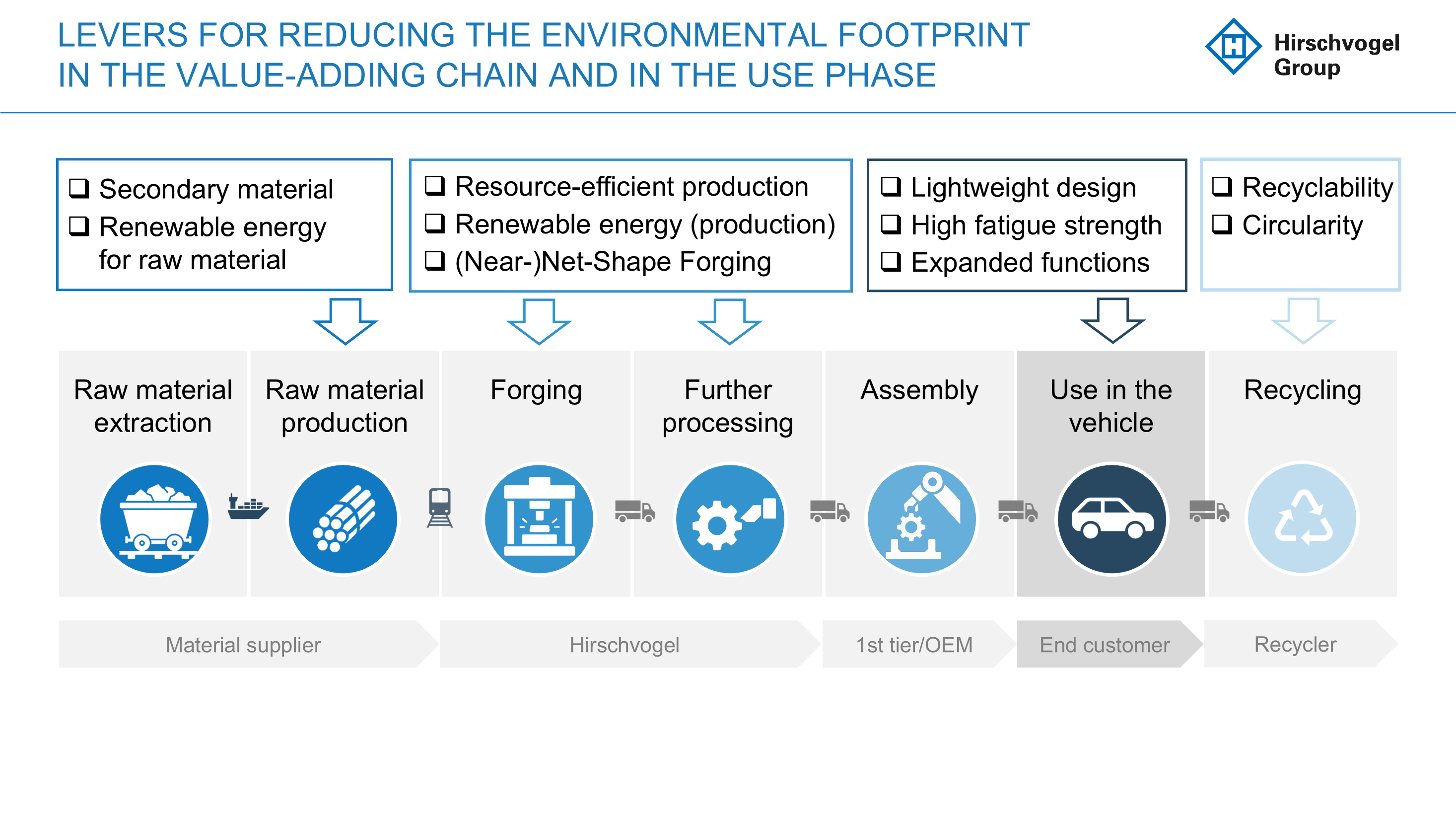
The forging of steel and aluminum offers numerous levers for reducing the environmental footprint of components and vehicles. Even at the raw material production stage, the use of secondary materials and renewable energy makes a significant contribution.
During forging and machining, resource-efficient processes, near-net-shape manufacturing, optimized material usage, and renewable energy contribute to reducing emissions. When it comes to product development, aspects such as lightweight design, expanded functionality, and the high fatigue strength of forged components enable weight reduction, a longer service life, and thus greater efficiency during the use phase. Furthermore, the recyclability of steel and aluminum as well as increasing material cycles support the circular economy.
Hirschvogel assists its customers in identifying opportunities to reduce emissions and resource consumption at an early stage. Together, we develop solutions along the value-adding chain – from material selection and process design to the finished component and its use in the vehicle. This allows us to combine technical performance, quality, cost-effectiveness, and resource efficiency in a targeted way.
Which levers would you like to activate? Contact us at: sustainability(at)hirschvogel(dot)com